
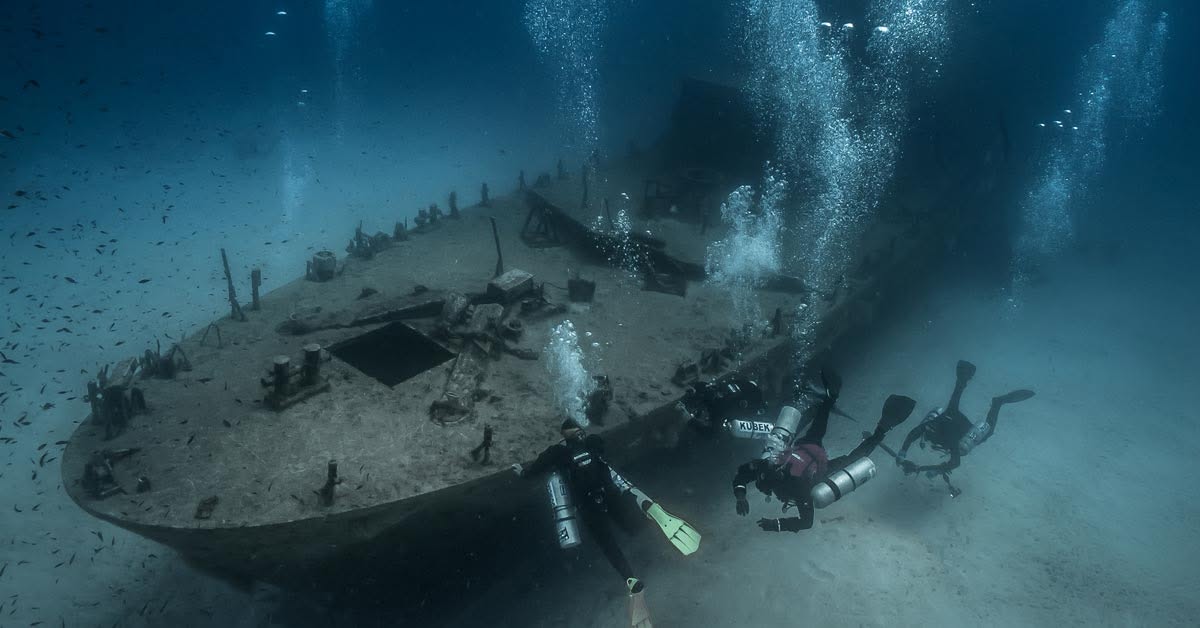
Swimming over a wreck and diving a wreck are two different things.
There’s a version of wreck diving that happens above the hull — you fin along the deck, peer into portholes, maybe drop into an open cargo hold with plenty of ambient light. It’s compelling. It’s also the safest, most forgiving version of the dive.
Then there’s what happens when you actually go inside.
The moment you lose the ambient exit above you, everything changes. Silt on the floor. Disorientation when vis drops to arm’s length. Outdated navigation instincts that worked in open water but mean nothing in an overhead environment.
Built for the Transition Inside
Our Wreck Diver course is built around that transition — from external diver to diver who can operate confidently inside a wreck structure:
- Penetration planning — how far in, on what gas, with what team
- Guideline deployment — running a reel properly so you can find your way out in zero vis
- No-mount limits — understanding when not to enter at all
- Navigation by touch and line — when your eyes stop being your primary tool
- Emergency protocols for overhead environments — lost line, lost buddy, disorientation
New England has some of the most rewarding wreck diving on the East Coast. Cold, dark, often low visibility — and completely worth it if you’ve done the training.
We’ve built this course around the wrecks you’re actually going to dive. Not a pool exercise. Real-world application.
Kraken DiveWorks | Newington, CT
Leave a Reply